How Adaptive Alien AI Defines Survival Horror in Alien Isolation
The Horror of a Thinking Predator
Few moments in survival horror feel as raw as the first time you hide inside a locker on the Sevastopol space station, listening to the heavy footsteps of the Xenomorph pass by. You hold your breath. The creature sniffs the air, hesitates, then moves on. You think you are safe. Then it doubles back. It checks the locker next to yours. That moment alone changed how I think about enemy design in horror games. The alien does not follow a patrol route. It does not trigger on a timer. It hunts using what the community calls an adaptive alien ai system, and that system is the real reason Alien Isolation remains a benchmark for the genre.
I have played through the game multiple times on Nightmare difficulty, and each run feels different. The Xenomorph learns. It adapts to how you play. If you rely too heavily on the motion tracker, it starts moving faster when it knows you are nearby. If you use the flame thrower to scare it off too often, it becomes more aggressive, charging through flames to reach you. This is not scripted behavior. It is a living, breathing threat that evolves over the course of a session. For anyone who appreciates immersive gameplay, that kind of tension is unmatched.
How the Alien Learns
The AI behind the Xenomorph is not a simple state machine. It uses a layered decision system that tracks your actions across multiple play sessions. The alien does not just react to noise. It remembers which hiding spots you favor, which tools you lean on, and even how long you stay in one area. On Nightmare difficulty, the learning curve is steeper. The alien adapts faster and punishes hesitation more severely. I have watched Let's Play videos that showcase no commentary runs in 4K resolution, and even without the player speaking, you can see the alien outthink them. It circles back to rooms they just cleared. It waits near exits they used before.
This behavior is a direct result of the adaptive alien ai design philosophy. The developers at Creative Assembly built a system where the alien shares a hive mind with the station's other synthetic threats. When a Working Joe spots you, the alien does not automatically know where you are. But if you fire a weapon or sprint through a corridor, the noise alerts both the alien and the humanoid synthetics. The station itself becomes a nervous system, and the Xenomorph is its feral heart. That interconnected design is what makes Sevastopol feel like a real place where every action has a consequence.
The Role of APOLLO AI
Seegson, the corporation that built Sevastopol, installed a central AI called APOLLO to manage station operations. APOLLO is not hostile by design, but its logic is cold and utilitarian. It prioritizes the station's mission over the safety of its crew. When the Xenomorph escapes containment, APOLLO does not try to kill it. Instead, it seals off sections, reroutes power, and lets the alien hunt. That cold calculation makes APOLLO as frightening as the creature itself. You are caught between a predator that learns and a machine that does not care. The synthetic humans, the Working Joes, are extensions of APOLLO's will. They patrol, they scan, and they call out your location. On Nightmare difficulty, a Working Joe spotting you is often a death sentence because the alien will arrive within seconds.
Amanda Ripley's Toolkit
Playing as Amanda Ripley, you are not a soldier. You are an engineer with a motion tracker, a maintenance jack, and a flame thrower if you are lucky. The motion tracker is your lifeline, but it is also a liability. Every time you pull it out, the alien learns that you are checking its position. Over time, it begins to move erratically, changing direction mid-stride to throw off your read. I have seen players complain that the tracker becomes useless after Mission Hour 42, but that is the point. The alien is learning to counter your tools. That is the adaptive alien ai at work. It forces you to rely on your ears and your instincts instead of a piece of equipment.
The flame thrower is a double-edged weapon. It can drive the alien back temporarily, but using it signals to the AI that you are willing to fight. The alien becomes more cautious, but also more determined. It starts flanking you, using vents and ceiling ducts to appear behind you. On Nightmare difficulty, the fuel for the flame thrower is scarce, so you must choose your moments carefully. I have gone entire runs without firing it once, relying on stealth and patience. Other runs, I have emptied the tank early and regretted it when the alien cornered me in a dead-end hallway.
Why No HUD and No Commentary Matter
Watching a no commentary playthrough of Alien Isolation in 4K resolution with no HUD is not just a visual treat. It is a study in how the game communicates without words. The HUD normally shows your health, your inventory, and a compass. Without it, you have to read the environment. You check the flickering lights to know if the alien is near. You listen for the sound of the vents opening. You watch the floor for blood trails. That level of immersion is exactly what the adaptive alien ai was designed to support. The alien does not need a radar blip to be terrifying. It needs to feel like it is thinking, and the no HUD mode strips away the crutches that would normally reduce that tension.
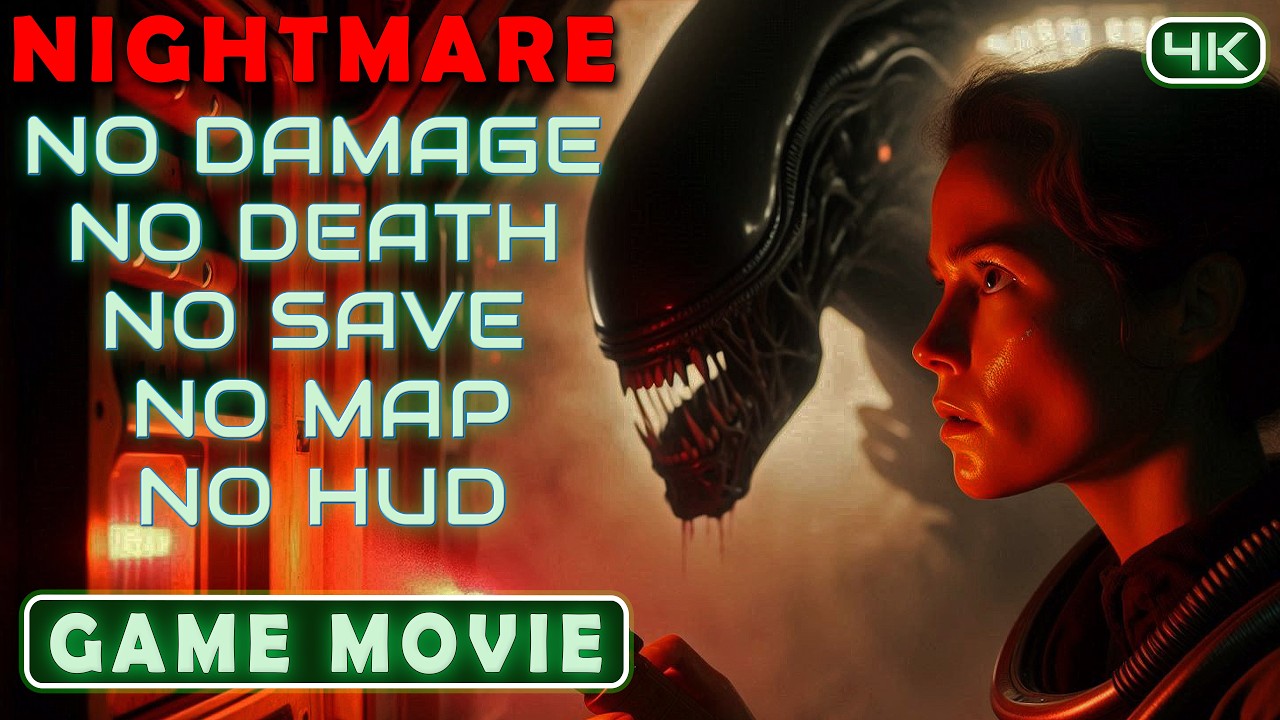
No commentary runs also highlight the game's pacing. Without someone talking over the action, you notice the quiet moments. The hum of the Sevastopol power grid. The distant scream of a crew member. The wet thud of the Xenomorph dropping from a vent. Those sounds become the only feedback you have, and they are more effective than any jump scare. The adaptive alien ai controls those moments. It decides when to be loud and when to be silent. It can wait in a room for ten minutes, doing nothing, until you let your guard down. That patience is what makes the creature feel like a real predator, not a video game boss.
The Weyland-Yutani Connection
The lore of Alien Isolation ties back to the larger Weyland-Yutani corporation, but on Sevastopol, it is Seegson's technology that dominates. The space station is a Seegson facility, and the Working Joes are their products. Weyland-Yutani's influence is felt through the synthetic human prototypes and the APOLLO AI, but the station itself is a cramped, industrial maze built by a company that cut corners. Every dark corridor and flickering light panel tells a story of corporate negligence. The adaptive alien ai exploits that environment. It knows the vents, the maintenance shafts, and the dead-end rooms. It uses the station's layout as a weapon, and you must learn to do the same.
The Carthage, a ship that appears later in the story, offers a brief respite, but even there the alien finds you. The AI does not reset when you change locations. It remembers the behaviors you have shown and adapts to the new space. That continuity is rare in survival horror games. Most enemies reset their patrol routes when you enter a new zone. The Xenomorph does not. It carries its memory of you across the entire station, making every encounter feel connected.
The Legacy of Adaptive AI in Horror
Since Alien Isolation released, few games have matched its AI design. The concept of an adaptive alien ai that learns from the player's actions is still rare. Most horror games rely on scripted sequences or random spawning. The Xenomorph feels different because it is not following a script. It is reacting to you in real time, and that creates moments that no designer could have planned. I have seen the alien ignore a noise maker I threw and instead investigate the locker I was hiding in. I have seen it chase a Working Joe past me, then double back and check my hiding spot anyway. Those moments are not bugs. They are the AI working as intended, and they are terrifying.
For anyone who wants to experience survival horror at its most intense, I recommend playing Alien Isolation on Nightmare difficulty with no HUD. The adaptive alien ai will push you to your limits. It will learn your habits, counter your tools, and force you to think like a prey animal. That is the heart of the game, and it is why the community still watches no commentary runs in 4K resolution years after release. The horror does not fade because the alien never stops learning.